Alexander Ethics Foundation
The Alexander Ethics Foundation (AEF) is dedicated to promoting ethical leadership, resilience, wellbeing, and responsible innovation through education, mentoring, and interdisciplinary collaboration. Inspired by the values of Aristotle’s teachings to Alexander the Great, AEF focuses on empowering future generations with the skills, integrity, and ethical judgment needed to lead in a rapidly evolving world. Building Ethical Leaders for a Resilient Future.
Contact us
Subheading
Frequently asked questions
Can't find an answer? Don't hesitate to reach out!
Why is it called the “Alexander Ethics Foundation”?
Why is it called the “Alexander Ethics Foundation”?
The Alexander Ethics Foundation (AEF) draws inspiration from the historical relationship between Aristotle and Alexander the Great — one of the most influential examples of mentorship, education, and leadership development in history.
While Alexander is widely recognized for his achievements as a military and political leader, the Foundation focuses primarily on the formative role of ethical education, critical thinking, philosophy, and character-building in shaping future leaders.
The name “Alexander” symbolizes:
leadership with vision,
courage combined with wisdom,
lifelong learning,
resilience,
and the responsibility that accompanies influence and power.
AEF believes that leadership should not be measured solely by success or authority, but by integrity, ethical judgment, empathy, and contribution to society.
The Foundation’s mission is therefore deeply connected to the timeless idea that education and values shape not only successful individuals, but responsible human beings.
Why was the Foundation created?
Why was the Foundation created?
The Alexander Ethics Foundation was established in response to the growing need for ethical, resilient, and human-centered leadership in an increasingly complex and rapidly evolving world.
Modern societies face major challenges related to:
technological transformation,
artificial intelligence,
social polarization,
mental wellbeing,
crisis management,
ethical governance,
youth development,
and responsible decision-making.
While innovation and technology continue to advance rapidly, ethical thinking, empathy, integrity, and resilience are often not developed at the same pace.
AEF was created to help bridge this gap.
The Foundation aims to support:
children and young people,
students and educators,
professionals and future leaders,
and communities seeking to promote responsible leadership and social impact.
Through education, mentoring, interdisciplinary dialogue, public engagement, and strategic collaboration, AEF promotes the idea that ethics should not be treated as an abstract concept, but as a practical foundation for leadership, governance, innovation, and everyday decision-making.
AEF also places strong emphasis on empowering future generations with the skills and values necessary to lead responsibly in both digital and physical environments.
Is the Alexander Ethics Foundation a non-profit organization?
Is the Alexander Ethics Foundation a non-profit organization?
Yes. The Alexander Ethics Foundation (AEF) operates as a non-profit initiative dedicated to public benefit, education, ethical leadership development, and social impact.
The Foundation’s activities focus on:
education and awareness,
mentorship and youth empowerment,
ethics and responsible innovation,
resilience and wellbeing,
leadership development,
and interdisciplinary collaboration.
AEF’s long-term vision is to create accessible educational and social initiatives that contribute positively to communities, future generations, and society as a whole.
The Foundation is independent, mission-driven, and guided by principles of integrity, inclusivity, responsibility, and human-centered progress.
Its purpose is not commercial profit, but the advancement of ethical values, leadership culture, resilience, and meaningful societal contribution.
What are the main areas of focus of AEF?
What are the main areas of focus of AEF?
The Alexander Ethics Foundation focuses on:
Ethical Leadership
Youth Empowerment
Mentorship & Education
AI Ethics & Responsible Innovation
Resilience & Crisis Awareness
Wellbeing & Human Development
Governance & Integrity
Sportsmanship & Values-Based Education
Women in Leadership
Human-Centered Technology
AEF promotes interdisciplinary collaboration between academia, professionals, educators, institutions, and communities to create initiatives with long-term social value.
Who can collaborate with AEF?
Who can collaborate with AEF?
AEF welcomes collaboration with:
educational institutions,
universities and researchers,
schools and youth organizations,
non-profit organizations,
professionals and mentors,
public and private sector organizations,
sports and wellbeing initiatives,
and individuals who share the Foundation’s mission and values.
The Foundation strongly believes that ethical leadership and resilience are collective responsibilities that require international dialogue, cooperation, and inclusive participation.
What does “Building Ethical Leaders for a Resilient Future” mean?
What does “Building Ethical Leaders for a Resilient Future” mean?
This phrase reflects the Foundation’s core belief that future leaders must be prepared not only with knowledge and technical skills, but also with:
ethical judgment,
empathy,
responsibility,
resilience,
critical thinking,
and respect for humanity and society.
AEF believes that true progress is sustainable only when innovation, leadership, and success are guided by ethical values and human-centered principles.
The Foundation’s goal is therefore not simply to support achievement, but to help cultivate leaders capable of creating positive and lasting impact in the world.
Mission
-
The Alexander Ethics Foundation (AEF) is committed to advancing ethical leadership, resilience, wellbeing, and responsible innovation through education, mentorship, interdisciplinary collaboration, and public engagement.
Inspired by the enduring values of Aristotle’s teachings to the young Alexander the Great, the Foundation seeks to cultivate character, critical thinking, integrity, empathy, and ethical judgment in future generations.
AEF’s mission is to empower children, young people, professionals, and communities with the knowledge, values, and leadership skills necessary to navigate the challenges of an increasingly complex and technology-driven world with responsibility and humanity.
Through initiatives focused on ethics, governance, resilience, AI safety, wellbeing, sportsmanship, and inclusive leadership, the Foundation promotes a human-centered approach to progress — one that places wisdom, accountability, and social impact at the core of leadership and innovation.
AEF believes that true leadership is not defined solely by achievement or authority, but by the ability to inspire trust, uphold ethical principles, and contribute meaningfully to society.
Building Ethical Leaders for a Resilient Future.
-
Alexander Ethics Foundation -
Building Ethical Leaders:
Nurturing WellBeing,
Empowering Through Sports
1. Our Name — Alexander: Protector of People
The name Alexander comes from alexein (“to protect”) and andros (“man”), meaning “protector of people.” This timeless value—combined with the Alexander family name—anchors our mission: to protect, uplift, and cultivate leaders who embody integrity, resilience, and compassion.
2. Inspired by a Legacy of Vision and Learning
Alexander the Great’s story teaches us that leadership is not only about conquest, but also about vision, mentorship under Aristotle, respect for cultural diversity, and unity through shared values. At the Foundation, we channel this spirit — not for domination, but for education, empathy, and empowerment.
3. Christina Alexander Alexandropoulou:
A Personal Path to Ethical Leadership
Founder Christina Alexander Alexandropoulou has built her career across borders and industries, leading security and safety at global organizations such as Lucent, Avaya, Four Seasons Hotels & Resorts, andPhilip Morris International. Her philosophy is guided by Socrates: 'Falling down is not a failure. Failure comes when you stay where you have fallen.' Her leadership is shaped by adaptability,
collaboration, and empathy.
As a wife, mother of twin daughters, and partner to a professional basketball coach, Christina understands that teamwork, resilience, and mentoring are essential in life, sport, and business.
4. Mission: Where Ethics, Well Being, and Sport Intersect
We believe leadership must be:
Educated — through mentoring and ethical training;
Measured — by mental health, resilience, and cultural empathy;
Active — strengthened by sport, teamwork, and discipline that build character.
5. Our Core Pillars
Pillar Description:
Education & Leadership Mentorship programs for students and young professionals, shaping tomorrow’s leaders.
Wellbeing Support Resources and peer networks for victims of workplace violence, harassment or abuse.
Sport-Driven Character Development Community sports activities that reinforce integrity, discipline, and resilience.
Mentoring & Community Building circles of support, especially empowering women in underrepresented areas.
6. Foundation Messaging Themes
We ground our work in four themes that make our mission tangible and inspiring for donors,
partners, and communities:
• Protection: Safeguarding dignity, rights, and well-being.
• Education: Empowering minds with ethics, knowledge, and vision.
• Resilience: Building mental and physical strength through mentorship and sport.
• Unity: Bringing people together across borders, backgrounds, and generations.
7. Program Design That Links Narrative to Action
Every initiative connects back to our themes and story:
• Schools & Universities → Leadership development workshops inspired by Aristotle and modern ethical challenges.
• Workplace Advocacy → Counseling, awareness, and training programs addressing violence, harassment, and misconduct.
• Sports & Mentorship Camps → Coaching programs merging athletic training with ethical
leadership lessons.
• Donor & Partner Engagement → Transparent reporting showing how contributions build
resilience, empower youth, and support victims.
8. Why This Foundation, Why Now?
In a world where unethical practices often erode trust and harm mental health, the Alexander Ethics Foundation stands as a beacon of accountability and care.
We answer today’s urgent need:
leadership that protects, inspires, and unites.
9. Our Promise
We commit to building ethical leaders who thrive in mind, body, and spirit. Through education,mentoring, well-being, and sport, we turn challenge into empowerment and vision into community action.
The Alexander Ethics Foundation is more than a name — it is a mission of protection,
resilience, and leadership for generations to come.

At the heart of the Alexander Ethics Foundation lies a powerful and often underexplored relationship: that between Aristotle and his student, the young Alexander.
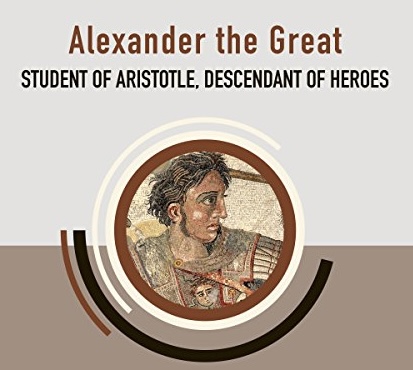
This relationship is not simply historical—it is philosophical, symbolic, and deeply relevant to the modern world. It provides the intellectual and moral backbone for both the Foundation’s mission and the narrative direction of the children’s book written by the Foundation’s Founder.
Aristotle, one of the greatest philosophers in history, did not teach ethics as a set of rigid rules. Instead, he introduced a way of thinking about life and decision-making grounded in virtue, balance, and purpose. His teachings emphasized that ethics is not theoretical—it is something we practice daily through our choices, habits, and actions.
When Aristotle was entrusted with the education of young Alexander, he was not merely shaping a future king. He was shaping a mind that would one day hold immense power. This dynamic is critical: it represents the belief that leadership must be guided by ethical reasoning from an early age.
This is the central idea that both the Foundation and the children’s book written by its Founder, Christina Alexander, seek to bring to life.
The teachings of Aristotle can be distilled into a few core principles that are highly relevant today:
First, the concept of virtue as a habit. Aristotle believed that we are not born ethical or unethical—we become so through repeated actions. Courage, honesty, fairness, and self-control are developed over time. This is a powerful message for children: who we become is shaped by what we repeatedly choose to do.
Second, the idea of the “golden mean.” Aristotle taught that virtue lies between extremes. Courage, for example, is the balance between recklessness and fear. This principle helps children understand that ethical decisions are often not black and white, but require judgment, reflection, and balance.
Third, the importance of purpose. Aristotle introduced the concept of “eudaimonia”—a flourishing life achieved through living with purpose and integrity. This connects directly to leadership: true success is not measured only by achievement, but by the way one lives and impacts others.
Finally, Aristotle emphasized the role of critical thinking. He encouraged questioning, reasoning, and understanding consequences. This is especially relevant in today’s world, where young people are exposed to complex information and must learn to navigate it responsibly.
The figure of young Alexander becomes the narrative bridge through which these teachings are explored.
In the children’s book, Alexander is not presented as a conqueror, but as a curious, questioning, and evolving learner. Through his interactions with Aristotle, readers are introduced to ethical dilemmas, small decisions, and moments of growth that reflect the development of character.
This approach allows children to engage with big ideas in an accessible and meaningful way. They do not simply learn what is “right” or “wrong”—they learn how to think, how to question, and how to choose.
For the Alexander Ethics Foundation, this same framework extends into a broader mission.
The Foundation is built on the belief that ethical leadership does not begin in boardrooms—it begins in education, in early formation, and in the cultivation of values. By grounding its philosophy in Aristotelian ethics, the Foundation positions itself as both timeless and forward-looking.
It connects ancient wisdom with modern challenges, showing that while the context of leadership may change, the fundamental questions remain the same.
Importantly, the inclusion of Aristotle also provides balance and depth to the narrative around Alexander. It reinforces that the Foundation does not focus on power alone, but on the guidance, responsibility, and ethical reflection that must accompany it.
From a strategic perspective, this duality—Aristotle and Alexander—creates a strong and differentiated identity:
Aristotle represents thought, ethics, and philosophy.
Alexander represents action, leadership, and real-world complexity.
Together, they embody the central mission of the Foundation:
to bridge the gap between knowing what is right and doing what is right.
This is what makes the story compelling—not only for children, but for leaders, organizations, and society as a whole.
Ultimately, the teachings of Aristotle are not just a historical reference. They are a living framework.
They remind us that ethics is not static. It is something we learn, practice, test, and refine throughout our lives.
And it is this journey—from learning to leading—that defines both the children’s book and the Alexander Ethics Foundation.

Alexander Ethics Foundation
Building Ethical Leaders for a Resilient Future